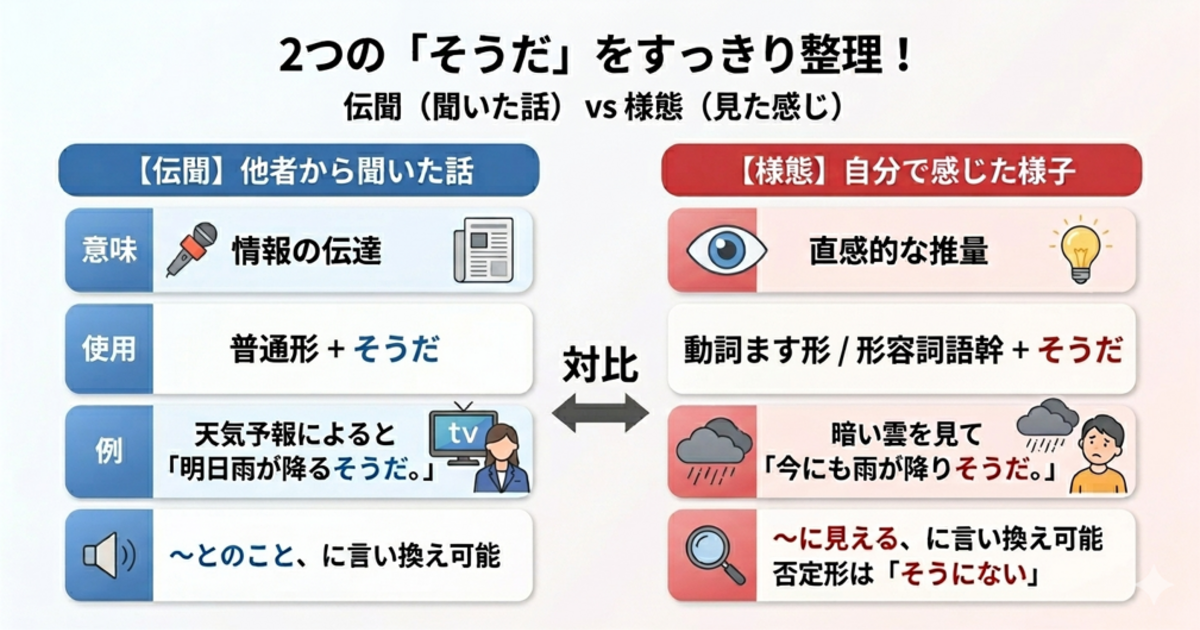
「雨が降りそうだ」と「雨が降るそうだ」。
一見そっくりですが、意味は「自分の予想」と「他人からの情報」という大きな違いがあります。試験では、意味よりも先に接続(前の形)を見て判断するのが鉄則です。
-
伝聞の「そうだ」(~だそうだ)
誰かから聞いた情報や、ニュースなどのニュースを伝える時に使います。
・意味: 「~という話だ」「~らしい」
・接続: 普通形 + そうだ
(名詞・な形容詞には「だ」がつきます)
・例: 明日は雨だそうだ。
・例: 田中さんは来ないそうだ。
文がそのままの形で「そうだ」にくっつくのが特徴です。 -
様態の「そうだ」(~そうだ)
自分の目で見た様子から、「今にも~しそうだ」「たぶん~だろう」と直感的に判断する時に使います。
・意味: 「今にも~しそうな様子だ」「見た感じ~だ」
・接続: 動詞ます形 / 形容詞語幹 + そうだ
(「い」「な」「ます」を切り落としてくっつけます)
・例: 雨が降りそうだ(空を見て判断)。
・例: このケーキはおいしそうだ(見て判断)。
【N3/N2の注意点】形容詞の例外
ここが一番の「ひっかけ」ポイントです。様態(見た感じ)のとき、以下の2つは形が変わります。
・いい + そうだ = よさそうだ
・ない + そうだ = なさそうだ
「いそうだ」「ないそうだ」とは言わないので、ここを覚えるだけで1点守れます。
まとめ:迷ったら接続をチェック
・文が完成している(普通形) + そうだ = 伝聞(聞いた話)
・語幹(ます、い、な、を取った形) + そうだ = 様態(見た感じ)
Rapid Japanese(β版)の文型トレーニングでは、こうした「接続の形」を瞬時に見分ける練習ができます。頭で考える前に、手が正解を選ぶ感覚を無料で体験してみませんか?
関連する文法まとめ: JLPTで迷いやすい推量・判断表現まとめ
読解で使う接続表現をまとめて確認したい場合は、読解で差がつく接続表現まとめも参考になります。
[▼ 無料で文型100問に挑戦する]
https://rapid-jt.com/
JLPT%E3%81%A7%E6%B7%B7%E4%B9%B1%E3%81%97%E3%82%84%E3%81%99%E3%81%84%E6%9D%A1%E4%BB%B6%E8%A1%A8%E7%8F%BE%E3%81%BE%E3%81%A8%E3%82%81%20%E3%83%BC%E3%80%8C%E3%81%A8%E3%80%8D%E3%80%8C%E3%81%B0%E3%80%8D%E3%80%8C%E3%81%9F%E3%82%89%E3%80%8D%E3%80%8C%E3%81%AA%E3%82%89%E3%80%8D%E3%81%AE%E9%81%95%E3%81%84%E3%82%92%E6%95%B4%E7%90%86%E3%81%99%E3%82%8B%E3%83%BC%20(1).png)
%E3%81%B0%E3%81%8B%E3%82%8A%E3%81%8BVS%E3%81%A0%E3%81%91%E3%81%A7%E3%81%AA%E3%81%8F%EF%BC%88%E6%97%A5%EF%BC%89%20(1).png)
%E3%80%8C%E6%9C%9F%E9%99%90%E3%82%92%E5%AE%88%E3%82%8B%E3%80%8D%E3%81%A8%E3%80%8C%E7%B7%A0%E3%82%81%E5%88%87%E3%82%8A%E3%81%AB%E9%96%93%E3%81%AB%E5%90%88%E3%81%86%E3%80%8D%E3%81%AE%E9%81%95%E3%81%84%EF%BC%88%E6%97%A5%EF%BC%89.png)
%E3%80%8C%E4%BA%88%E5%AE%9A%E3%81%8C%E5%85%A5%E3%82%8B%E3%80%8D%E3%81%A8%E3%80%8C%E4%BA%88%E5%AE%9A%E3%82%92%E5%85%A5%E3%82%8C%E3%82%8B%E3%80%8D%E3%81%AE%E9%81%95%E3%81%84%EF%BC%88%E6%97%A5%EF%BC%89.png)