「まで」と「までに」の違い、すぐ説明できますか?
日本語を学んでいると、よく似ているのに意味がはっきり違う表現に出会います。
その代表が、「まで」と「までに」です。
どちらも時間と一緒に使われるので、最初は「同じような意味では?」と思いやすいのですが、実はこの二つ、見ている時間のとらえ方がまったく違います。
ここがあいまいなままだと、会話でも作文でも、少し不自然な日本語になってしまいます。
今回は、「まで」と「までに」の違いを、できるだけわかりやすく整理してみましょう。
「まで」は、その時点まで続いているイメージ
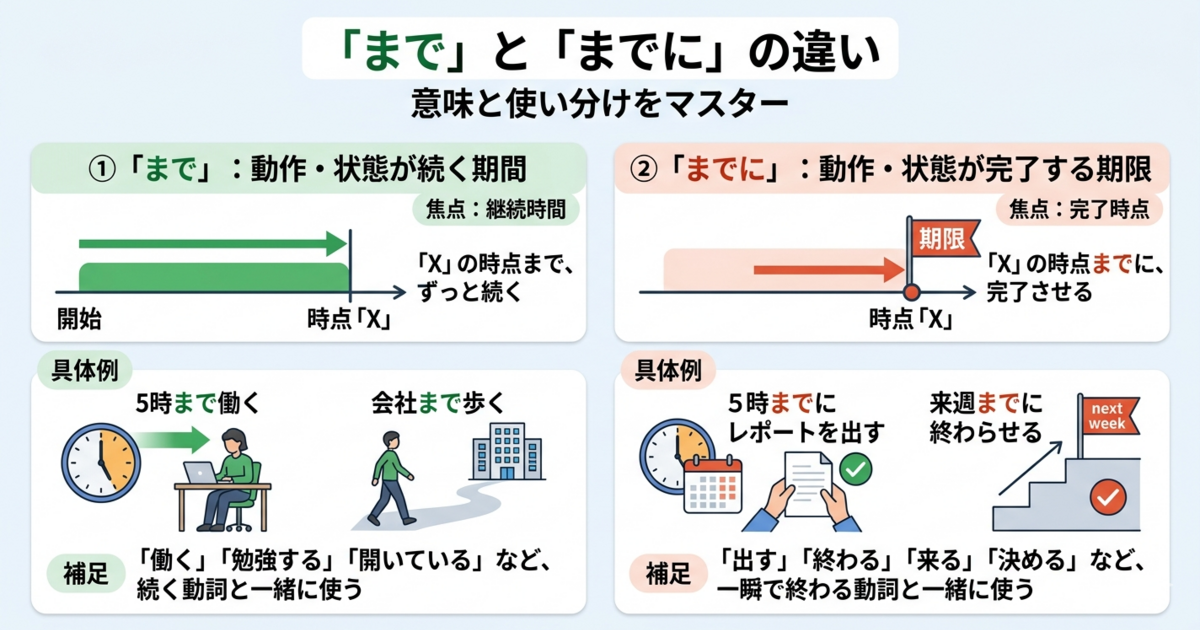
「まで」は、ある時点をゴールにして、そこまで動作や状態が続いていることを表します。
大事なのは、「途中がある」ということです。
たとえば、
3時まで勉強します。
この文では、勉強が1回だけ起こるのではなく、3時になる前までずっと続いているイメージがあります。
ほかにも、
来週まで日本にいます。
夏休みまでアルバイトをします。
このように、「まで」は、ある期間の終わりを示す言葉です。
言いかえると、「そこまで続く」という表現です。
「までに」は、その時点より前に終わればいいイメージ
一方で、「までに」は期限を表します。
ポイントは、「その時間の前に終わっていればいい」ということです。
たとえば、
3時までにレポートを出してください。
この文では、3時ぴったりまでずっとレポートを出し続けるわけではありません。
3時になる前のどこかの時点で提出が完了していればいい、という意味です。
さらに見てみましょう。
明日までに宿題をします。
金曜日までに連絡してください。
来月までに日本語能力試験に申し込みます。
これらはすべて、「締め切り」や「完了の期限」を表しています。
つまり、「までに」は「その時点までに終える」という表現なのです。
違いは「線」と「点」で考えるとわかりやすい
この二つの違いは、こんなふうに考えるととてもわかりやすくなります。
「まで」は線です。
ある時点まで、動作や状態が続いていきます。
「までに」は点です。
ある時点を締め切りにして、それまでのどこかで完了します。
たとえば、
夜10時まで勉強します。
なら、勉強は10時まで続きます。
夜10時までに勉強します。
だと、少し不自然です。
「勉強する」はふつう継続する動作なので、ここでは「まで」のほうが自然です。
逆に、
夜10時までレポートを出します。
は少しおかしく聞こえます。
レポート提出は普通、一瞬で完了する動作だからです。
この場合は、
夜10時までにレポートを出します。
が自然です。
よくある間違いは、「続く動作」か「終わる動作」かを見ていないこと
「まで」と「までに」で迷ったときは、その動詞がどんな動きかを見ると判断しやすくなります。
「いる」「勉強する」「働く」など、ある程度続く動作や状態なら、「まで」が合いやすくなります。
一方で、「出す」「送る」「提出する」「着く」「終わる」など、ある時点で完了する動作なら、「までに」が合いやすくなります。
もちろん、文脈によって細かい違いはありますが、まずはこの基本を押さえるだけで、かなり間違いが減ります。
例文で比べてみましょう
次のペアを見ると、違いがもっとはっきりします。
私は5時まで会社にいます。
これは、5時になる前まで会社にいる状態が続く、という意味です。
私は5時までに会社に行きます。
これは、5時になる前に会社に到着する、という意味です。
母は夜まで料理をしていました。
料理している時間が続いていた、ということです。
母は夜までに料理を作りました。
夜になる前に完成した、ということです。
このように、「続いているのか」「終えるのか」を意識すると、使い分けがとても自然になります。
試験でも会話でも、この違いはとても大切です
「まで」と「までに」は、日常会話でもJLPTでも本当によく出てきます。
しかも、単語自体は簡単なので、「なんとなくわかったつもり」で先に進んでしまう学習者も少なくありません。
でも、日本語はこうした小さな違いの積み重ねで、伝わり方が大きく変わります。
だからこそ、一つひとつの違いを、意味のイメージごと理解しておくことが大切です。
「まで」は継続。
「までに」は期限。
この軸が頭に入るだけで、文法問題も、読解も、作文も、かなり安定してきます。
関連する推量・判断表現をまとめて確認したい場合は、「JLPTで迷いやすい推量・判断表現まとめ」も参考になります。
原因・理由を表す表現をまとめて確認したい場合は、「JLPTで迷いやすい原因・理由表現まとめ」も参考になります。
まとめ
「まで」は、ある時点まで動作や状態が続く表現です。
「までに」は、ある時点より前に何かを終える表現です。
似ているようで、見ている時間の感覚はまったく違います。
日本語の文法は、単に形を覚えるだけではなく、「どんな場面を表しているか」をつかむことで、ぐっとわかりやすくなります。
こうした違いを一つずつ整理していくと、日本語はもっと正確に、もっと気持ちよく使えるようになります。
「まで」と「までに」のような、似ているけれど意味が違う文法をしっかり整理したい方は、RJTで実際の問題を解きながら学んでみてください。語彙・文法・読解・聴解を通して、使える日本語を少しずつ身につけていけます。
https://rapid-jt.com/
%E3%80%8C%E5%A7%8B%E6%9C%AB%E3%81%A0%E3%80%8D%E3%81%A8%E3%81%AF%E3%81%A9%E3%81%86%E4%BD%BF%E3%81%86%EF%BC%9F%E6%82%AA%E3%81%84%E7%B5%90%E6%9E%9C%E3%82%92%E5%BC%B7%E3%81%8F%E5%8D%B0%E8%B1%A1%E3%81%A5%E3%81%91%E3%82%8B%E6%96%87%E5%9E%8B%E3%82%92%E7%90%86%E8%A7%A3%E3%81%99%E3%82%8B.png)
%E3%80%8C%E3%81%BE%E3%81%84%E3%80%8D%E3%81%A8%E3%80%8C%E3%81%AA%E3%81%84%E3%81%A0%E3%82%8D%E3%81%86%E3%80%8D%E3%81%AE%E9%81%95%E3%81%84%E3%81%AF%EF%BC%9F%E5%8F%A4%E3%82%81%E3%81%AE%E5%90%A6%E5%AE%9A%E6%8E%A8%E9%87%8F%E3%81%8C%E5%87%BA%E3%81%9F%E3%81%A8%E3%81%8D%E3%81%AE%E5%AF%BE%E5%87%A6%E6%B3%95.png)
%E3%80%8C%E3%81%AB%E3%81%97%E3%81%A6%E3%81%AF%E3%80%8D%E3%81%A8%E3%80%8C%E3%82%8F%E3%82%8A%E3%81%AB%E3%80%8D%E3%81%AE%E9%81%95%E3%81%84%E3%81%AF%EF%BC%9F%E5%9F%BA%E6%BA%96%E3%81%A8%E3%81%AE%E3%81%9A%E3%82%8C%E3%82%92%E8%A1%A8%E3%81%99N2%E6%96%87%E5%9E%8B%E3%82%92%E6%95%B4%E7%90%86.png)
JLPT%E3%81%A7%E6%B7%B7%E4%B9%B1%E3%81%97%E3%82%84%E3%81%99%E3%81%84%E6%9D%A1%E4%BB%B6%E8%A1%A8%E7%8F%BE%E3%81%BE%E3%81%A8%E3%82%81%20%E3%83%BC%E3%80%8C%E3%81%A8%E3%80%8D%E3%80%8C%E3%81%B0%E3%80%8D%E3%80%8C%E3%81%9F%E3%82%89%E3%80%8D%E3%80%8C%E3%81%AA%E3%82%89%E3%80%8D%E3%81%AE%E9%81%95%E3%81%84%E3%82%92%E6%95%B4%E7%90%86%E3%81%99%E3%82%8B%E3%83%BC%20(1).png)