日本語を勉強していると、かなり早い段階で出会うのが「こと」と「の」です。
どちらも、動詞や文を名詞のようにできる便利な形です。
でも、ここで多くの学習者が止まります。
「日本語を勉強すること」
「日本語を勉強するの」
どちらも見たことがある。
意味もなんとなく似ている。
けれど、実際に自分で使おうとすると、どちらを選べばいいのか迷う。
この迷いはとても自然です。
なぜなら、「こと」と「の」は、置き換えられる場面もある一方で、響きや自然さがはっきり変わる場面も多いからです。
この記事では、「こと」と「の」の違いを、できるだけすっきり整理します。
細かい文法用語に振り回されるのではなく、実際にどう感じが違うのか、どんな場面で使い分けるのかを中心に見ていきましょう。
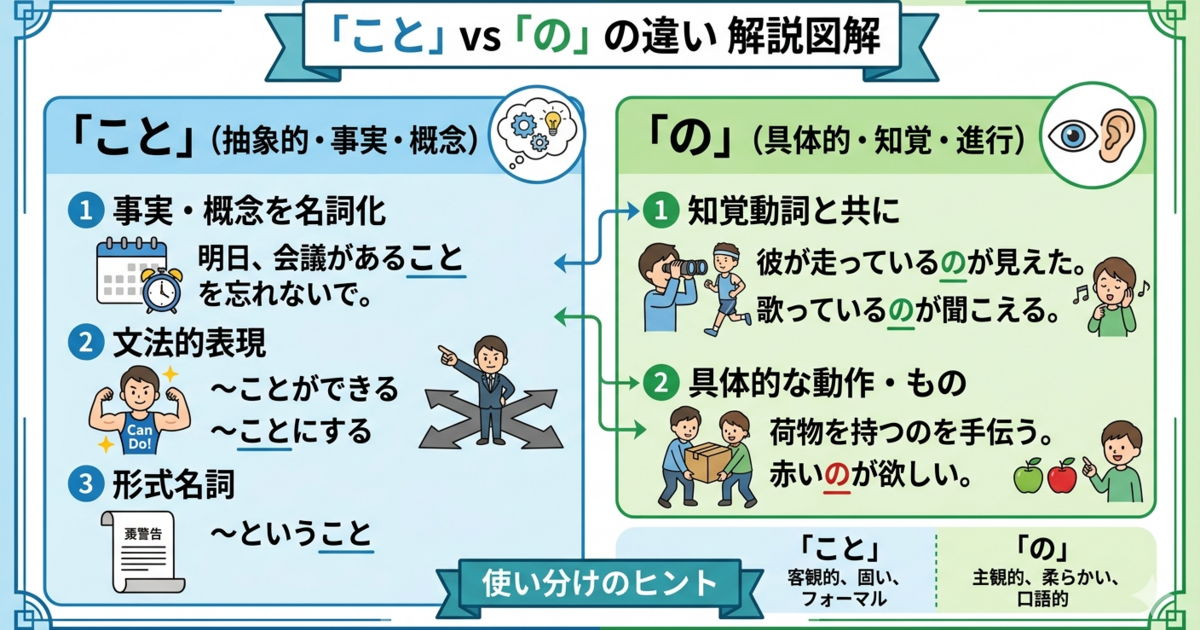
まず結論 「こと」は抽象的、「の」は具体的
いちばん大事なポイントはここです。
「こと」は、内容を少し離れて、まとまりとして見る感じがあります。
「の」は、その場のことや目の前のことを、より近く、具体的に感じさせます。
とても簡単に言うと、
- 「こと」 は説明的で、硬めで、抽象的
- 「の」 は会話的で、やわらかく、具体的
この違いを先に持っておくだけで、かなり整理しやすくなります。
「こと」は内容をひとまとまりの事実として見る
「こと」は、行為や状態を、ひとつの事項として扱う感じがあります。
たとえば、こんな文です。
- 日本語を勉強することは大切です。
- 毎日復習することが上達への近道です。
- 約束を守ることは信頼につながります。
ここでは、目の前の具体的な一回の行動というより、「そういう行為一般」や「そういう事柄」を述べています。
つまり、「こと」は内容を少し抽象化して、説明したり、評価したり、一般論として述べたりするときに強いのです。
「こと」がよく合う場面
- 一般論を言うとき
- ルールや方針を述べるとき
- 文章らしく、少し硬めに言いたいとき
たとえば、
- 外国語は続けることが大切です。
- 人の話を最後まで聞くこと。
- 試験では時間を意識することが必要です。
このあたりは、「の」にすると不自然ではない場合もありますが、「こと」のほうがずっと落ち着いて聞こえます。
「の」は行為や場面を近く感じさせる
一方の「の」は、もっと具体的です。
- 日本語を勉強するのは楽しいです。
- 友だちと話すのが好きです。
- 窓から海が見えるのがうれしいです。
こうした文では、その行為や場面が、話し手の感覚にかなり近いところにあります。
「こと」が説明なら、「の」は実感です。
特に、「好き」「楽しい」「うれしい」「嫌だ」「見える」「聞こえる」など、感情や感覚に近い表現では、「の」がとても自然です。
「の」がよく合う場面
- 自分の気持ちを言うとき
- 実際の場面を思い浮かべやすいとき
- 会話でやわらかく言いたいとき
たとえば、
- 本を読むのが好きです。
- 一人で旅行するのは少し不安です。
- 子どもが笑っているのを見るのが好きです。
これを全部「こと」にすると、意味は通じても少しかたく、説明っぽくなります。
置き換えられるけれど、響きが違う文
ここが一番大切です。
「こと」と「の」は、文法的には両方使えそうでも、聞こえ方が違うことがよくあります。
例1
- 日本語を勉強することは楽しいです。
- 日本語を勉強するのは楽しいです。
どちらも通じます。
でも、自然なのは後者です。
「楽しい」は話し手の実感に近い言葉なので、「の」のほうがぴったり合います。
例2
- 毎日運動することは大切です。
- 毎日運動するのは大切です。
こちらは前者のほうが自然です。
「大切です」は一般論や助言として述べることが多いので、「こと」のほうが安定します。
つまり、単純に「どちらも名詞化」と覚えるだけでは足りません。
その文が、説明なのか、実感なのかを見る必要があります。
「こと」が使われやすい代表パターン
「こと」は、特に次のような形でよく使われます。
1. 重要性や必要性を述べる
- 早めに準備することが大切です。
- まず相手の話を聞くことが必要です。
2. 規則・指示・注意を書く
- 教室では静かにすること。
- 宿題は明日までに出すこと。
この用法はかなり典型的です。
掲示や説明文で「の」を使うと、ぐっと不自然になります。
3. 経験や事実を述べる形
- 私の趣味は写真を撮ることです。
- 将来の夢は海外で働くことです。
こういう文では、「こと」が名詞としてしっかり立っています。
「の」が使われやすい代表パターン
「の」は、会話や感情ととても相性がいいです。
1. 好き・嫌い・得意・苦手
- 料理するのが好きです。
- 人前で話すのが苦手です。
2. 見る・聞く・感じるに近い内容
- 子どもが遊んでいるのを見ました。
- だれかが話しているのが聞こえます。
3. 理由をやわらかく説明する
- 遅れたのは、電車が止まったからです。
- 行かなかったのは、少し熱があったからです。
このあたりは、「こと」より「の」のほうが自然で、会話にもなじみます。
学習者がよく迷うポイント
「好きです」はなぜ「の」が自然なのか
たとえば、
- 音楽を聞くのが好きです。
- 音楽を聞くことが好きです。
後の文も完全な間違いとは言いませんが、かなり不自然です。
理由は、「好き」がとても感覚的な表現だからです。
頭の中で説明しているのではなく、気持ちをそのまま言っているので、「の」のほうが自然になります。
「ことです」が安定する文も多い
たとえば、
- 大切なのは続けることです。
- 私の目標は日本で働くことです。
こういう文は、「こと」でないと文の骨組みが弱くなります。
ここでは「の」より、「こと」が一つの事項としてしっかり支えている感じがあります。
どちらを選ぶか迷ったときのコツ
迷ったときは、次の順番で考えるとかなり整理しやすいです。
1. 一般論・説明・規則なら「こと」を先に考える
- 勉強を続けることが重要です。
- 遅刻しないこと。
2. 感情・感覚・会話の実感なら「の」を先に考える
- 勉強するのは楽しいです。
- 一人で行くのはちょっと不安です。
3. 目の前の場面が見えるなら「の」が強い
- 猫が寝ているのを見ました。
- 雨が降っているのがわかります。
4. 事項としてまとめたいなら「こと」が強い
- 留学することを決めました。
- 毎日書くことを目標にしています。
試験で見分けるための覚え方
覚え方はとてもシンプルです。
- 「こと」 は事柄としてまとめる
- 「の」 は場面として近く見る
このイメージを持つだけで、かなりぶれにくくなります。
「こと」は少し上から整理して見ている感じ。
「の」はその場に近づいて感じている感じ。
この距離感の違いがわかると、文の選び方が一気に安定します。
原因・理由を表す表現をまとめて確認したい場合は、「JLPTで迷いやすい原因・理由表現まとめ」も参考になります。
限定を表す表現の違いを整理したい場合は、「JLPTで迷いやすい限定表現まとめ」も参考になります。
まとめ
「こと」と「の」は、どちらも便利な表現ですが、同じではありません。
違いをひとことで言えば、
- 「こと」は抽象的で説明的
- 「の」は具体的で感覚的
です。
この違いを知らないまま覚えると、「どちらでもよさそう」に見えて、いつまでも迷います。
でも、文が一般論なのか、実感なのかを意識するだけで、選びやすさは大きく変わります。
文法は、似ている形を並べて覚えるだけでは、なかなか使えるようになりません。
本当に大事なのは、響きの違いまで感じ取ることです。
「こと」と「の」のような、学習者がつまずきやすい細かい違いを、例文と問題で整理しながら身につけたい方は、RJTで実践してみてください。文法の違いを知識として覚えるだけでなく、実際に選べる感覚まで育てやすくなります。
%E3%80%8C%E6%9C%9F%E9%99%90%E3%82%92%E5%AE%88%E3%82%8B%E3%80%8D%E3%81%A8%E3%80%8C%E7%B7%A0%E3%82%81%E5%88%87%E3%82%8A%E3%81%AB%E9%96%93%E3%81%AB%E5%90%88%E3%81%86%E3%80%8D%E3%81%AE%E9%81%95%E3%81%84%EF%BC%88%E6%97%A5%EF%BC%89.png)
%E3%80%8C%E4%BA%88%E5%AE%9A%E3%81%8C%E5%85%A5%E3%82%8B%E3%80%8D%E3%81%A8%E3%80%8C%E4%BA%88%E5%AE%9A%E3%82%92%E5%85%A5%E3%82%8C%E3%82%8B%E3%80%8D%E3%81%AE%E9%81%95%E3%81%84%EF%BC%88%E6%97%A5%EF%BC%89.png)
%E3%80%8C%E8%87%AA%E4%BF%A1%E3%81%8C%E3%81%82%E3%82%8B%E3%80%8D%E3%81%A8%E3%80%8C%E8%87%AA%E4%BF%A1%E3%82%92%E6%8C%81%E3%81%A4%E3%80%8D%E3%81%AE%E9%81%95%E3%81%84%EF%BC%88%E6%97%A5%EF%BC%89.png)
%E3%80%8C%E5%BF%85%E8%A6%81%E3%81%8C%E3%81%82%E3%82%8B%E3%80%8D%E3%81%A8%E3%80%8C%E5%BF%85%E8%A6%81%E3%81%AB%E3%81%AA%E3%82%8B%E3%80%8D%E3%81%AE%E9%81%95%E3%81%84%EF%BC%88%E6%97%A5%EF%BC%89.png)
%E3%80%8C%E5%8F%AF%E8%83%BD%E6%80%A7%E3%81%8C%E9%AB%98%E3%81%84%E3%80%8D%E3%81%A8%E3%80%8C%E5%8F%AF%E8%83%BD%E6%80%A7%E3%81%8C%E3%81%82%E3%82%8B%E3%80%8D%E3%81%AE%E9%81%95%E3%81%84%EF%BC%88%E6%97%A5%EF%BC%89.png)
%E3%80%8C%E7%B5%90%E8%AB%96%E3%82%92%E5%87%BA%E3%81%99%E3%80%8D%E3%81%A8%E3%80%8C%E7%B5%90%E8%AB%96%E3%81%AB%E9%81%94%E3%81%99%E3%82%8B%E3%80%8D%E3%81%AE%E9%81%95%E3%81%84%EF%BC%88%E6%97%A5%EF%BC%89.png)